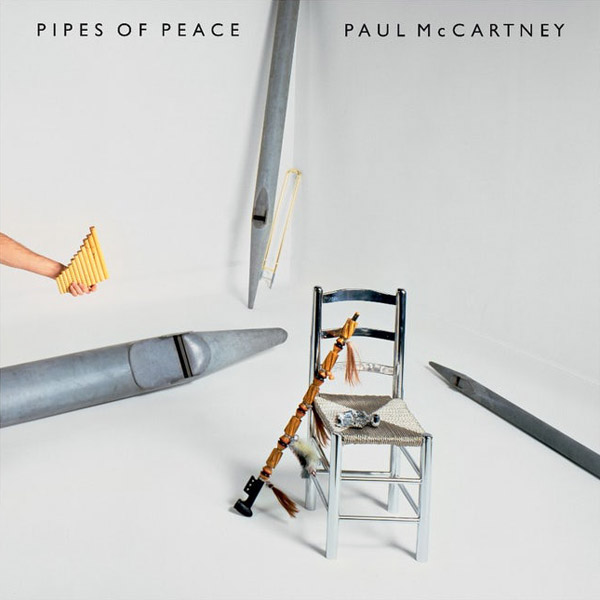
UK Release date : Oct 31, 1983
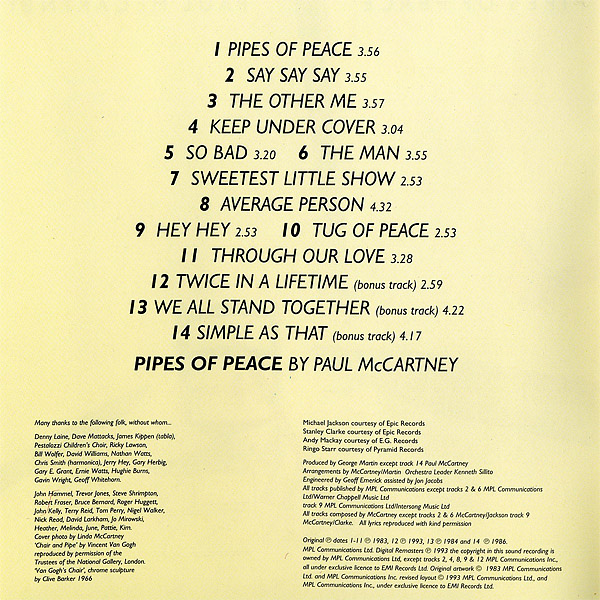
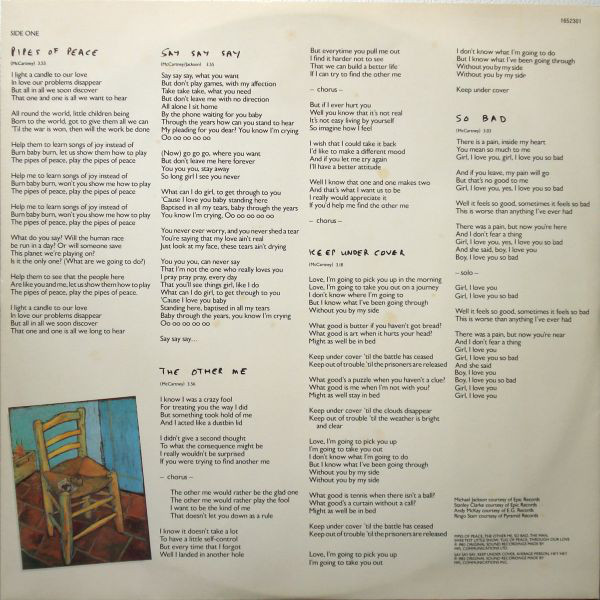
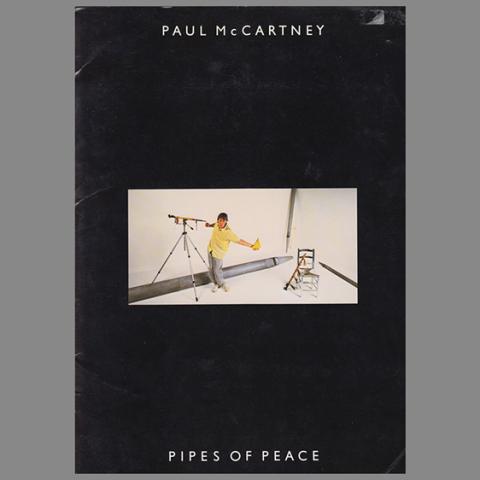
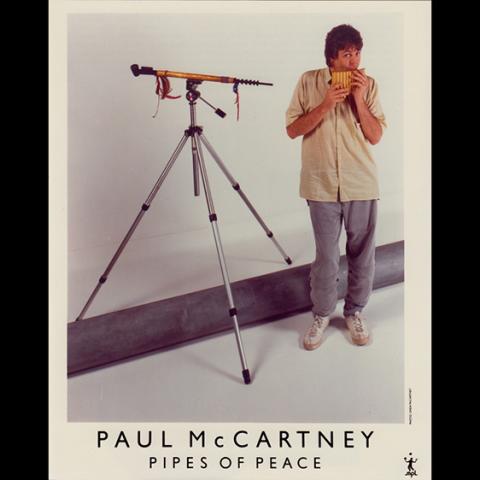
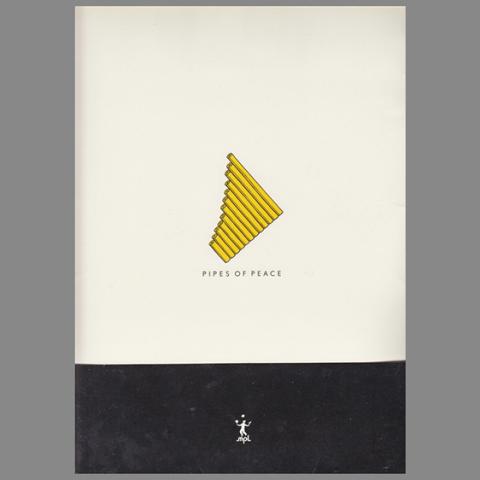
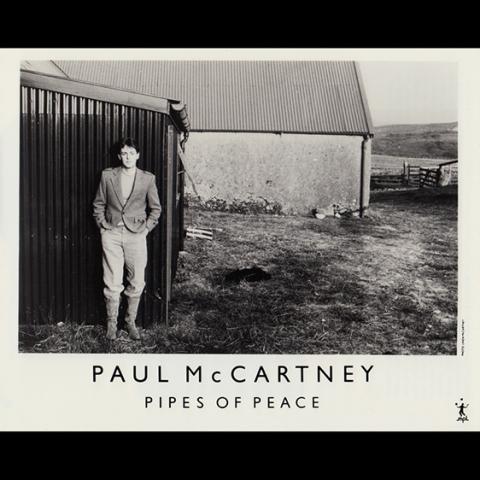
Pipes Of Peace
By Paul McCartney • Official album • Part of the collection “Paul McCartney • Studio albums”
Last updated on December 19, 2022
UK Release date : Oct 31, 1983
By Paul McCartney • Official album • Part of the collection “Paul McCartney • Studio albums”
Last updated on December 19, 2022
Previous album Nov 30, 1982 • "Thriller" by Michael Jackson released in the US
Single Oct 03, 1983 • "Say Say Say" by Paul McCartney released in the UK
Film October 4-7, 1983 • Shooting of "Say Say Say" promo film
Album Oct 31, 1983 • "Pipes Of Peace" by Paul McCartney released in the UK
Album Oct 31, 1983 • "Pipes Of Peace" by Paul McCartney released in the US
Interview Nov 12, 1983 • Paul McCartney interview for Titbits
This album was recorded during the following studio sessions:
Written by Paul McCartney
3:56 • Studio version • A
Paul McCartney : Arrangement, Backing vocals, Bass, Drums (?), Piano, Shaker (?), Synthesizer (?), Tambourine (?), Vocals Linda Eastman / McCartney : Backing vocals Eric Stewart : Backing vocals George Martin : Arrangement, Producer Geoff Emerick : Mixing engineer, Recording engineer Jon Jacobs : Mixing engineer assistant, Recording engineer assistant Adrian Brett : Pan flute James Kippen : Tabla Pestalozzi's Children Choir : Choir Unknown : Horns, Strings
SessionRecording : Sep 10, 1982 • Studio : AIR Studios, London, UK
Overdubs : October 1982 • Studio : AIR Studios, London, UK
SessionMixing : Jun 30, 1983 • Studio : AIR Studios, London, UK
Credits & recording details courtesy of Luca Perasi • From the books "Paul McCartney: Music Is Ideas. The Stories Behind the Songs" • Buy Volume 1 (1970-1989) and Volume 2 (1990-2012) on Amazon
Written by Paul McCartney, Michael Jackson
3:56 • Studio version • A
Paul McCartney : Arrangement, Backing vocals, Electric guitar (?), Electric piano (?), Percussion (?), Synthesizers (?), Vocals Linda Eastman / McCartney : Backing vocals Michael Jackson : Backing vocals, Vocals Eric Stewart : Backing vocals George Martin : Arrangement, Producer Geoff Emerick : Mixing engineer, Recording engineer Jon Jacobs : Mixing engineer assistant, Recording engineer assistant Jerry Hey : Horns Nathan Watts : Bass Bill Wolfer : Keyboards, Synthesizers David Williams : Electric guitar Chris Smith : Harmonica Ricky Lawson : Drums Ernie Watts : Horns Gary E. Grant : Horns Gary Herbig : Horns
SessionRecording : May 1981 • Studio : AIR Studios, London, UK ; Odyssey Studios, London, UK
SessionRecording : April 1982 • Studio : Cherokee Studios, Los Angeles, USA ; Sigma Sound Studios, New York City, USA
SessionMixing : Feb 15, 1983 • Studio : AIR Studios, London, UK
Credits & recording details courtesy of Luca Perasi • From the books "Paul McCartney: Music Is Ideas. The Stories Behind the Songs" • Buy Volume 1 (1970-1989) and Volume 2 (1990-2012) on Amazon
Written by Paul McCartney
3:59 • Studio version • A
Paul McCartney : Acoustic guitar, Arrangement, Backing vocals, Bass (?), Electric guitar (?), Keyboards (?), Piano (?), Tambourine (?), Vocals George Martin : Arrangement, Producer Geoff Emerick : Mixing engineer, Recording engineer Jon Jacobs : Mixing engineer assistant, Recording engineer assistant
SessionRecording : Jan 11, 1983 • Studio : AIR Studios, London, UK
SessionMixing : Jul 06, 1983 • Studio : AIR Studios, London, UK
Credits & recording details courtesy of Luca Perasi • From the books "Paul McCartney: Music Is Ideas. The Stories Behind the Songs" • Buy Volume 1 (1970-1989) and Volume 2 (1990-2012) on Amazon
Written by Paul McCartney
3:06 • Studio version • A
Paul McCartney : Acoustic guitar, Arrangement, Backing vocals, Drums (?), Electric guitar, Piano, Vocals Linda Eastman / McCartney : Backing vocals, Tambourine (?) Denny Laine : Acoustic guitar (?), Electric guitar (?) Stanley Clarke : Bass Eric Stewart : Backing vocals George Martin : Arrangement, Producer Geoff Emerick : Mixing engineer, Recording engineer Jon Jacobs : Mixing engineer assistant, Recording engineer assistant Unknown : Strings
SessionRecording : Nov 30, Dec 7, Dec 8, 1980 • Studio : AIR Studios, London, UK
SessionOverdubs : Feb 11, 1981 • Studio : AIR Studios, Montserrat
SessionOverdubs : Mar 23, 1981 • Studio : AIR Studios, London, UK
SessionMixing : Jan 25, 1983 • Studio : AIR Studios, London, UK
Credits & recording details courtesy of Luca Perasi • From the books "Paul McCartney: Music Is Ideas. The Stories Behind the Songs" • Buy Volume 1 (1970-1989) and Volume 2 (1990-2012) on Amazon
Written by Paul McCartney
3:21 • Studio version • A
Paul McCartney : Arrangement, Backing vocals, Bass, Electric piano (?), Piano (?), Vocals Linda Eastman / McCartney : Backing vocals, Keyboards (?) Ringo Starr : Drums Eric Stewart : Backing vocals, Electric guitar George Martin : Arrangement, Producer Geoff Emerick : Mixing engineer, Recording engineer Jon Jacobs : Mixing engineer assistant, Recording engineer assistant Unknown : Strings
SessionRecording : Sep 16, 1982 • Studio : AIR Studios, London, UK
Mixing : Unknown • Studio : AIR Studios, London, UK
Credits & recording details courtesy of Luca Perasi • From the books "Paul McCartney: Music Is Ideas. The Stories Behind the Songs" • Buy Volume 1 (1970-1989) and Volume 2 (1990-2012) on Amazon
Written by Paul McCartney, Michael Jackson
3:56 • Studio version • A
Paul McCartney : Acoustic guitar (?), Arrangement, Backing vocals, Bass (?), Drums (?), Electric guitar (?), Vocals Linda Eastman / McCartney : Backing vocals, Vocals Michael Jackson : Backing vocals, Vocals Eric Stewart : Backing vocals George Martin : Arrangement, Producer Geoff Emerick : Mixing engineer, Recording engineer Jon Jacobs : Mixing engineer assistant, Recording engineer assistant Unknown : Flutes, Strings
SessionRecording : May 1981 • Studio : AIR Studios, London, UK
Overdubs ? : April 1982 ? • Studio : Cherokee Studios, Los Angeles, USA
SessionRecording : Aug 25, 1983 • Studio : Sigma Sound Studios, New York City, USA
SessionMixing : Jun 08, 1983 • Studio : AIR Studios, London, UK
Credits & recording details courtesy of Luca Perasi • From the books "Paul McCartney: Music Is Ideas. The Stories Behind the Songs" • Buy Volume 1 (1970-1989) and Volume 2 (1990-2012) on Amazon
Written by Paul McCartney
2:54 • Studio version • A
Paul McCartney : Acoustic guitar, Arrangement, Backing vocals, Bass, Castanets (?), Drums (?), Electric guitar, Piano (?), Shaker (?), Synthesizers (?), Vocals, Vocoder George Martin : Arrangement, Producer Geoff Emerick : Mixing engineer, Recording engineer Jon Jacobs : Mixing engineer assistant, Recording engineer assistant
SessionRecording : Jan 02, 1981 • Studio : Parkgate Studio, Sussex, UK
SessionRecording : Jul 11, 1983 • Studio : AIR Studios, London, UK
SessionMixing : Jan 25, 1983 • Studio : AIR Studios, London, UK
Credits & recording details courtesy of Luca Perasi • From the books "Paul McCartney: Music Is Ideas. The Stories Behind the Songs" • Buy Volume 1 (1970-1989) and Volume 2 (1990-2012) on Amazon
Written by Paul McCartney
4:33 • Studio version • A
Paul McCartney : Acoustic guitar (?), Arrangement, Backing vocals, Bass, Electric guitar (?), Piano, Vocals Linda Eastman / McCartney : Backing vocals Denny Laine : Acoustic guitar (?), Electric guitar (?) Ringo Starr : Drums Eric Stewart : Backing vocals George Martin : Arrangement, Producer Geoff Emerick : Mixing engineer, Recording engineer Jon Jacobs : Mixing engineer assistant, Recording engineer assistant Mike Stavrou : Recording engineer assistant Unknown : Horns
SessionRecording : February 16-18th, 1981 • Studio : AIR Studios, Montserrat
SessionRecording : July 1981 • Studio : AIR Studios, London, UK
SessionMixing : Sep 01, 1981 • Studio : AIR Studios, London, UK
Credits & recording details courtesy of Luca Perasi • From the books "Paul McCartney: Music Is Ideas. The Stories Behind the Songs" • Buy Volume 1 (1970-1989) and Volume 2 (1990-2012) on Amazon
Written by Paul McCartney, Stanley Clarke
2:55 • Studio version • A
Paul McCartney : Arrangement, Backing vocals, Electric guitar, Keyboards (?), Synthesizer (?) Denny Laine : Electric guitar (?) Stanley Clarke : Bass George Martin : Arrangement, Producer Geoff Emerick : Mixing engineer, Recording engineer Steve Gadd : Drums Jon Jacobs : Mixing engineer assistant Mike Stavrou : Recording engineer assistant
SessionRecording : Feb 10, 1981 • Studio : AIR Studios, Montserrat
SessionMixing : Feb 01, 1983 • Studio : AIR Studios, London, UK
Credits & recording details courtesy of Luca Perasi • From the books "Paul McCartney: Music Is Ideas. The Stories Behind the Songs" • Buy Volume 1 (1970-1989) and Volume 2 (1990-2012) on Amazon
Written by Paul McCartney
2:55 • Studio version • A
Paul McCartney : Acoustic guitar (?), Arrangement, Backing vocals, Bass (?), Drums (?), Electric guitar (?), Garden canes, Keyboards (?), Shaker (?), Tambourine (?), Vocals George Martin : Arrangement, Garden canes, Producer Geoff Emerick : Mixing engineer, Recording engineer Jon Jacobs : Mixing engineer assistant, Recording engineer assistant
SessionRecording : Jan 29, 1982 • Studio : AIR Studios, London, UK
SessionMixing : Jul 06, 1983 • Studio : AIR Studios, London, UK
Credits & recording details courtesy of Luca Perasi • From the books "Paul McCartney: Music Is Ideas. The Stories Behind the Songs" • Buy Volume 1 (1970-1989) and Volume 2 (1990-2012) on Amazon
Written by Paul McCartney
3:39 • Studio version • A
Paul McCartney : Acoustic guitar (?), Arrangement, Backing vocals, Bass, Shaker (?), Vocals Linda Eastman / McCartney : Backing vocals Eric Stewart : Backing vocals George Martin : Arrangement, Bicycle wheel, Piano, Producer Geoff Emerick : Mixing engineer, Recording engineer Dave Mattacks : Drums Jon Jacobs : Mixing engineer assistant, Recording engineer assistant Geoff Whitehorn : Acoustic guitar Unknown : Horns, Strings
SessionRecording : Sep 14, 1982 • Studio : AIR Studios, London, UK
SessionMixing : Jul 04, 1983 • Studio : AIR Studios, London, UK
Credits & recording details courtesy of Luca Perasi • From the books "Paul McCartney: Music Is Ideas. The Stories Behind the Songs" • Buy Volume 1 (1970-1989) and Volume 2 (1990-2012) on Amazon
“Tug Of War” is supposed to be about opposites, I forget what you call it, dichotomy or something. The duality. Yes and No, Up and Down, Man and Woman. Always some kind of conflict, even if you’re married and in love, she’s still a girl, you’re still a boy… Blacks and whites. Dualities. It’s not easy to bring together two sides of a coin. So that was like the question if there was a theme on “Tug Of War”, that was the sort of theme we played with.
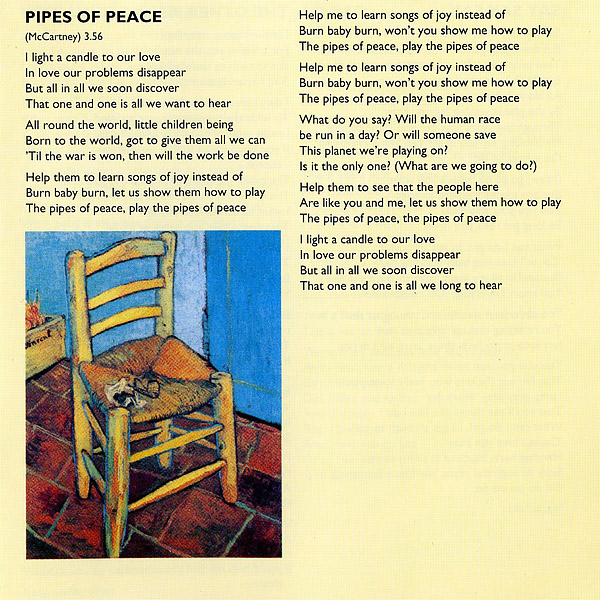
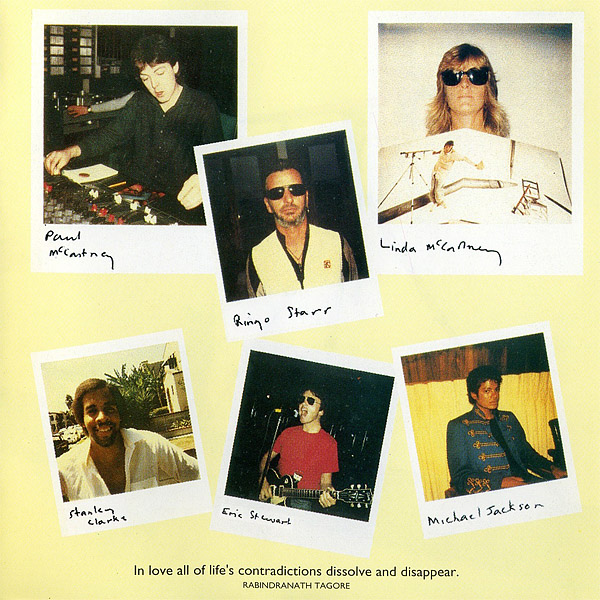
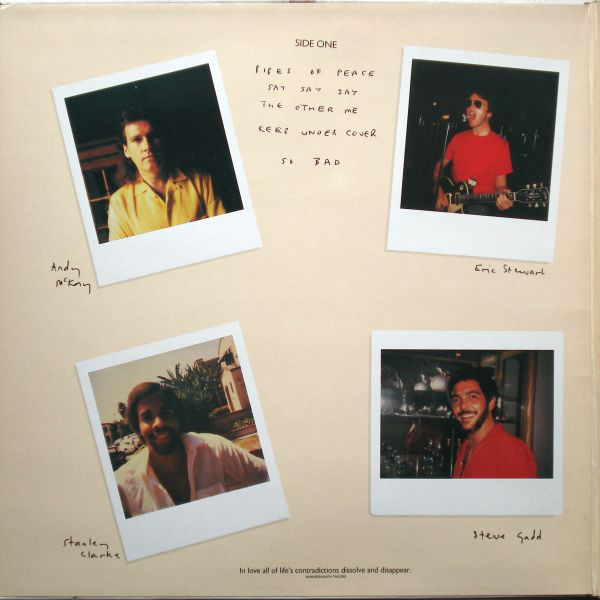
So, on ‘Pipes Of Peace,’ I wanted to answer that, I didn’t want to just leave the question posing ‘How do you ever get the dualities together?’ And on ‘Pipes Of Peace,’ there’s a little quote from Rabindranath Tagore would you believe, Indian lovers? He was an Indian poet, and he just has a thing about ‘In love, life’s contradictions dissolve and disappear.’
It seems to me that that’s the kind of thing. There is this big paradox, and duality. But in love, somehow, it mystically goes away. Somehow there aren’t problems with black and white if they sort of love each other. So in trying to find an answer, this one is a bit more towards ‘The answer is love.’ And it’s very corny, and it’s been said a million times before. But if you can’t find another answer, what are you going to do? I would like to have been able to say the answer is Ralph! And I’ve got it, and it’s very original…
But the only one I could find was love. I ask myself, what is the answer to that duality? So that’s what this one became about, ‘Pipes Of Peace’, love! ‘The Other Me,’ ‘So Bad,’ ‘Keep Under Cover’ stuff. It’s all about trying to answer the dilemma of ‘Tug Of War,’ and that’s enough serious talk — for months!
Paul McCartney, from Club Sandwich N° 31, 1983
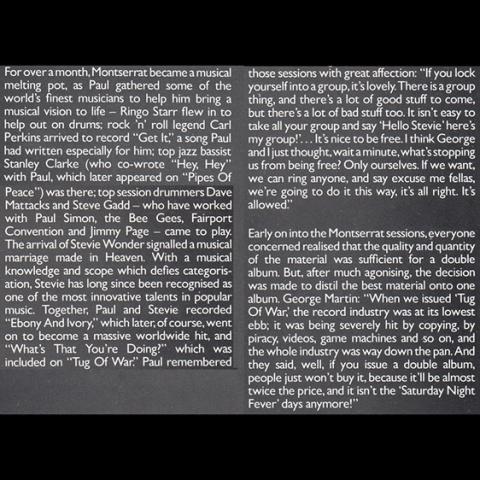
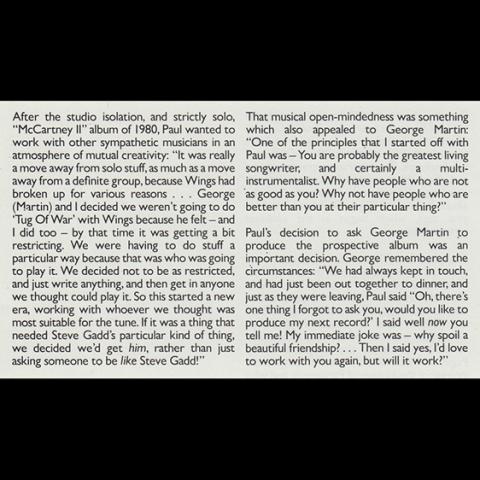
Way back, when we started ‘Tug of War,’ my thoughts to Paul were ‘Let’s make a slightly harder, a more funky album than perhaps you have done in the past’… In fact, the ‘Pipes Of Peace’ album became more what we were looking for in ‘Tug Of War,’ and certainly Michael Jackson’s tracks turned out that way. Although they were Paul and Michael’s songs, they seemed to get more of that dynamism on those tracks.
George Martin, from Club Sandwich N° 31, 1983
From Wikipedia:
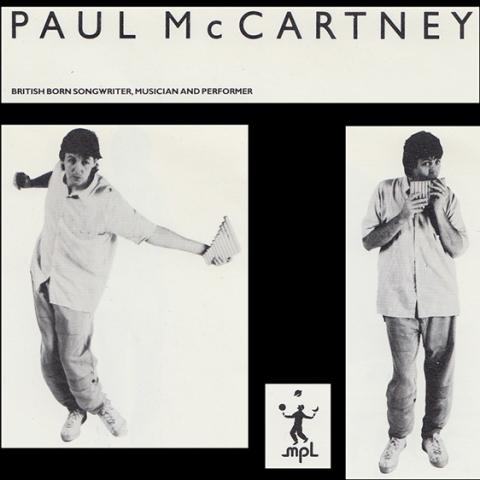
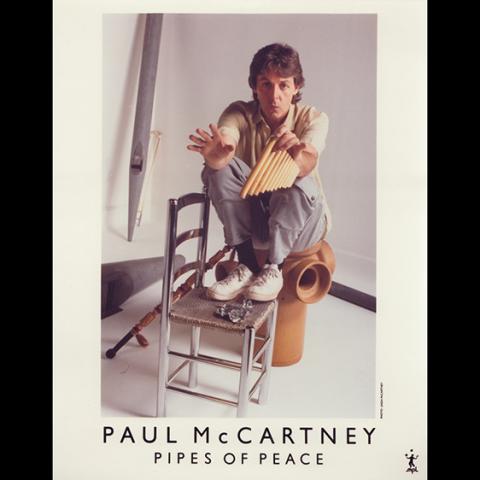
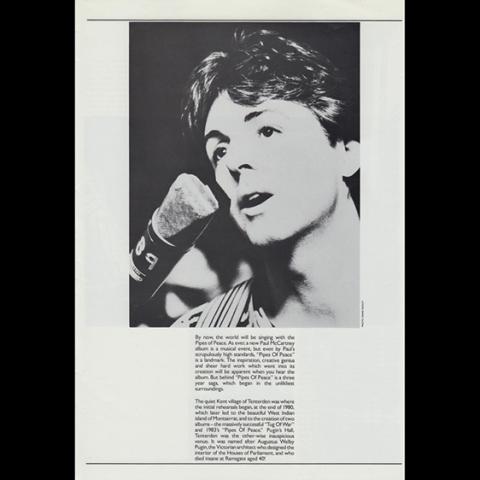
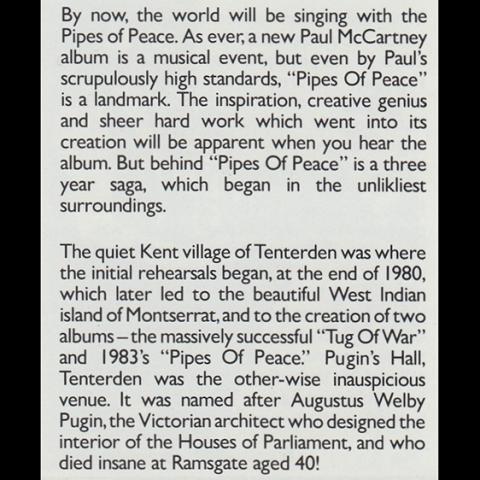
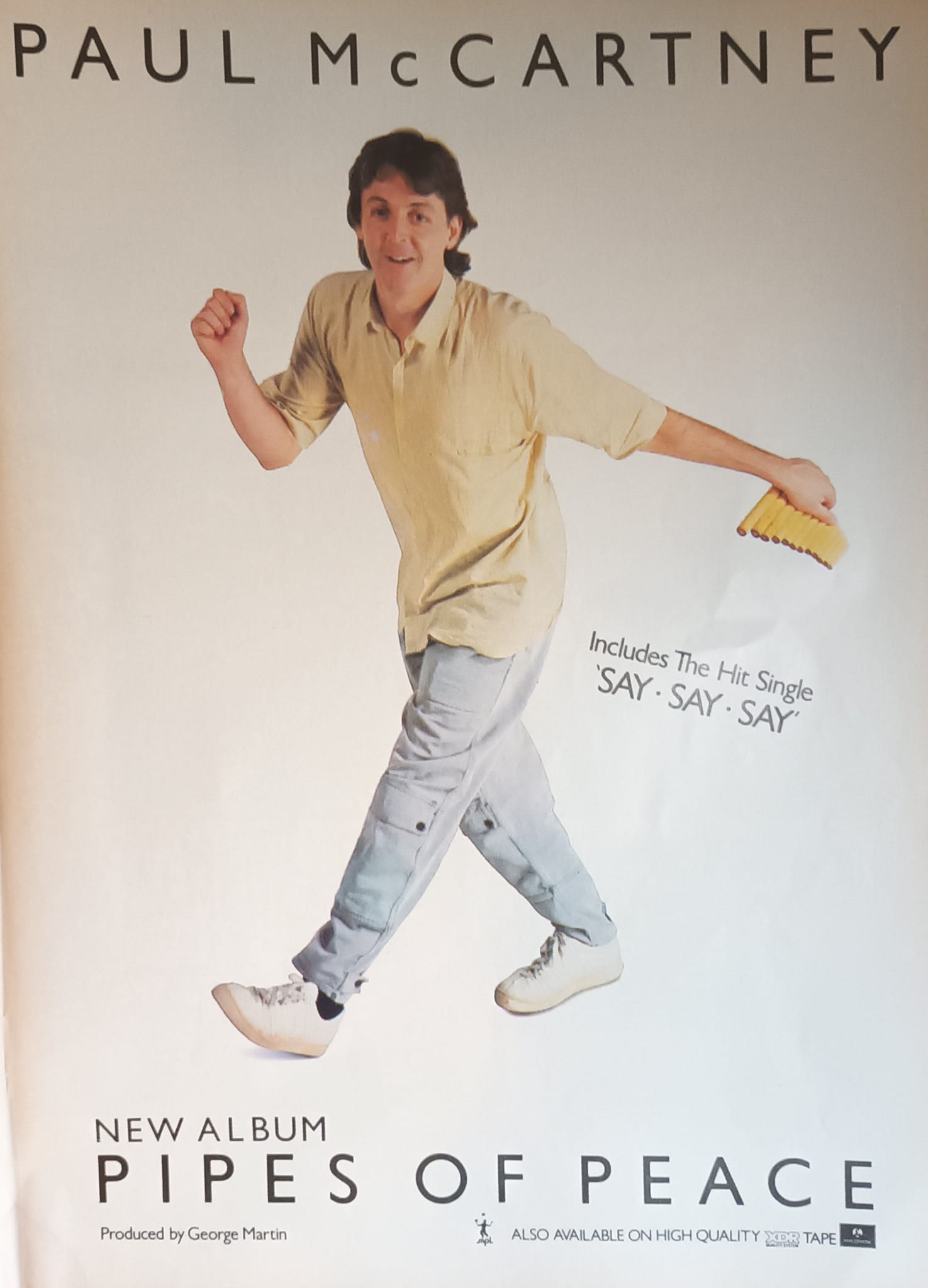
Pipes of Peace is the fourth studio album by English singer-songwriter Paul McCartney, released in 1983. As the follow-up to the popular Tug of War, the album came close to matching the commercial success of its predecessor in Britain but peaked only at number 15 on America’s Billboard 200 albums chart. While Pipes of Peace was the source of international hit singles such as “Say Say Say” (recorded with Michael Jackson) and the title track, the critical response to the album was less favourable than that afforded to Tug of War.
Background and structure
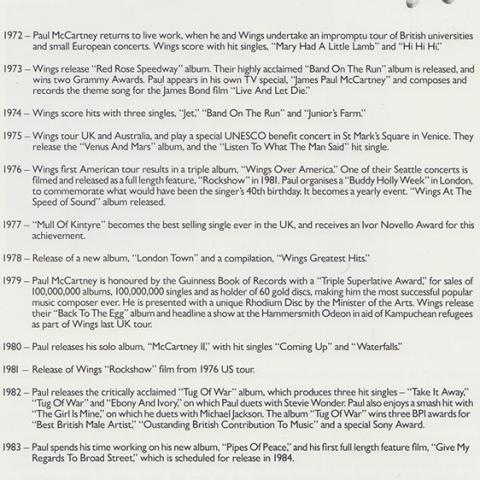
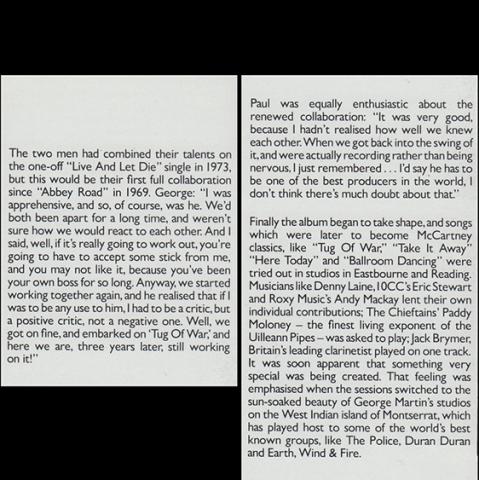
Upon its release, many were quick to notice that Pipes of Peace mirrored its predecessor in many ways. It was produced by George Martin, it featured two collaborations with the same artist (this time with Michael Jackson; the Tug of War collaborations being with Stevie Wonder), and continued McCartney’s alliance in the studio with Ringo Starr, former 10cc guitarist Eric Stewart and his last session work with Wings guitarist Denny Laine. The reason for all of this is that many of the songs released on Pipes of Peace were recorded during the 1981 sessions for Tug of War, with “Pipes of Peace“, “The Other Me”, “So Bad”, “Tug of Peace” and “Through Our Love” being recorded afterwards, in September–October 1982. By November, McCartney would start shooting his self-written motion picture Give My Regards to Broad Street, co-starring wife Linda, Ringo Starr and Tracey Ullman, which would take up most of his time throughout 1983. Due to the filming commitments (and to allow a reasonable lapse of time between his new album and Tug of War), Pipes of Peace was delayed until October for release.
With momentum building for his film project – and the accompanying soundtrack album – McCartney would spend much of his energies finishing and preparing Give My Regards to Broad Street for its release in the autumn of 1984.
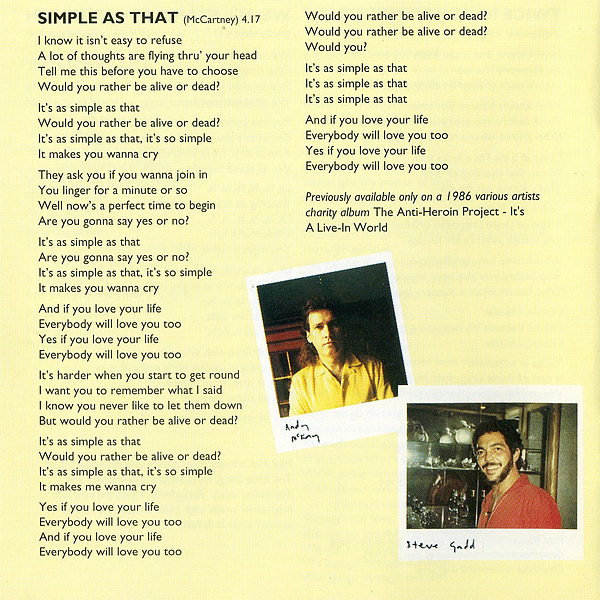
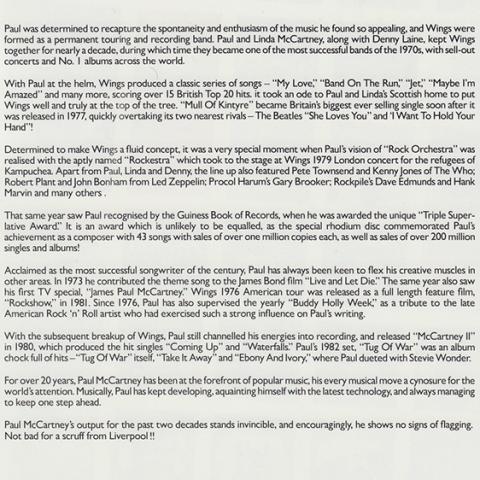
In 1983 Pipes of Peace made its debut on CD on Columbia Records. In 1993, the album was remastered and reissued on CD as part of “The Paul McCartney Collection” series, with the previously unreleased “Twice in a Lifetime” (the title song for a 1985 film); his 1984 hit from the Rupert Bear project, “We All Stand Together“; and “Simple as That“, released in 1986 on the charity album The Anti-Heroin Project – It’s A Live-In World – all as bonus tracks. “Ode to a Koala Bear” (the B-side to “Say Say Say”) was overlooked for inclusion. The album was reissued in remastered form in 2015 as part of the ongoing ‘Paul McCartney Archive Collection’ series of releases. The version with “enhanced packaging” contains three discs: the remastered album itself, a bonus audio disc containing mostly demo versions of the songs found on the first disc, and a disc with a film.
Critical reception
Critical reaction was less than that which had greeted Tug of War, many feeling that Pipes of Peace was a weaker execution of its predecessor’s formula. In addition, author Howard Sounes writes, the album’s commercial reception was “slightly disappointing, considering the quality of the work“. Sounes views Pipes of Peace and its predecessor as “abounding with well-crafted tunes” that almost match the standard of McCartney’s work with the Beatles; yet, he adds, the two albums “must be marked down for a surfeit of love ballads with lamentable lyrics“.
Reviewing the album for the NME, Penny Reel described Pipes of Peace as “A dull, tired and empty collection of quasi-funk and gooey rock arrangements … with McCartney cooing platitudinous sentiments on a set of lyrics seemingly made up on the spur of the moment.” Reel opined that the “one decent moment” was the title track, which he found to be “a Beatlish soiree surely destined as a Christmas single“, before concluding: “Even here, however, a note of insincerity in the vocal finally defeats the lyric’s objective.“
The album featured the duet between McCartney and Jackson, “Say Say Say“, which reached number 2 in the UK and number 1 in the US, where it remained for six weeks through to early in 1984.
Following “Say Say Say“, the album’s title track became a UK number 1, while in the US, “So Bad” was a top 30 hit. Pipes of Peace peaked at number 4 in the UK and number 15 in the US. […]








Notice any inaccuracies on this page? Have additional insights or ideas for new content? Or just want to share your thoughts? We value your feedback! Please use the form below to get in touch with us.

Stav • Jul 31, 2020 • 5 years ago
isn't it the 5th album?
Mc I
Ram
Mc II
Tag
Pipes
Wiki is wrong

The PaulMcCartney Project • Aug 04, 2020 • 5 years ago
Hi Stav, there are so many ways to count his solo albums ... I guess Wikipedia said 4th one, because Ram is credited to Paul & Linda McCartney (they consider McCartney II to be his 2nd solo album)

George • Aug 07, 2020 • 5 years ago
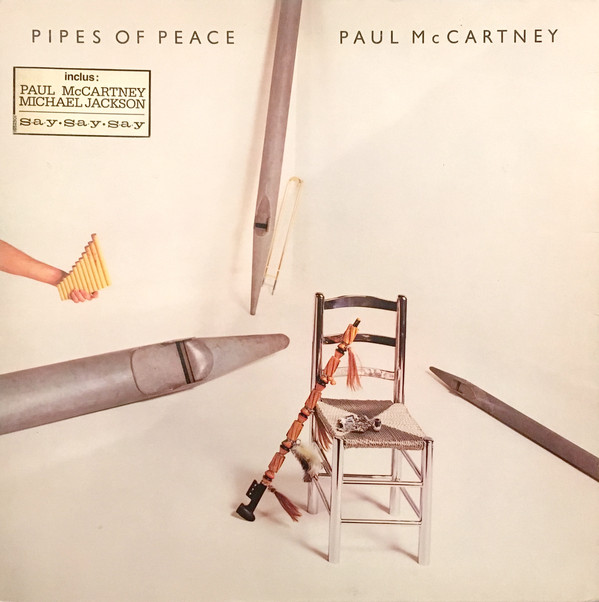
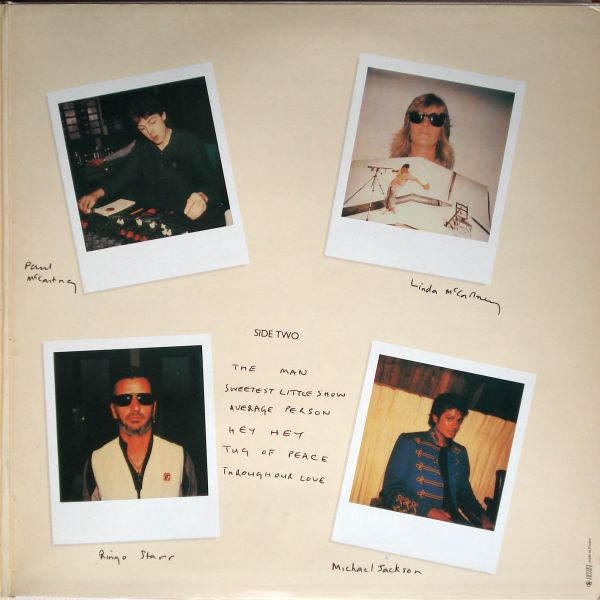
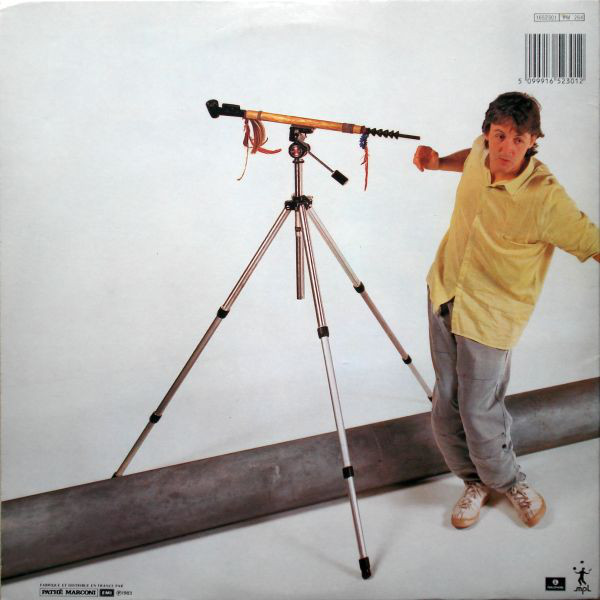
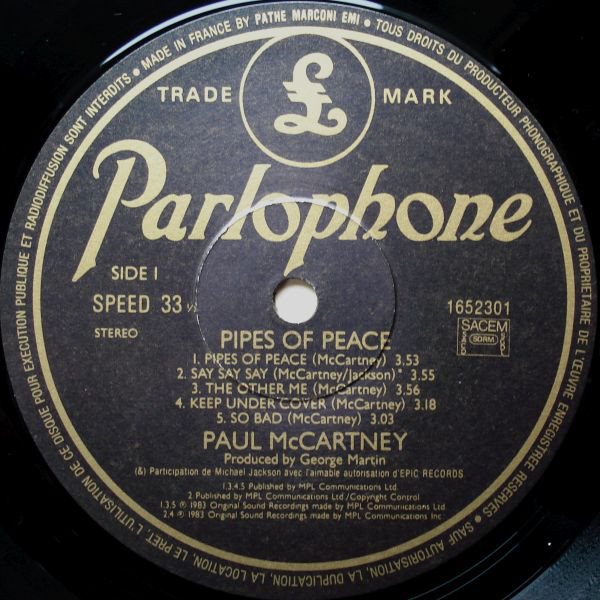
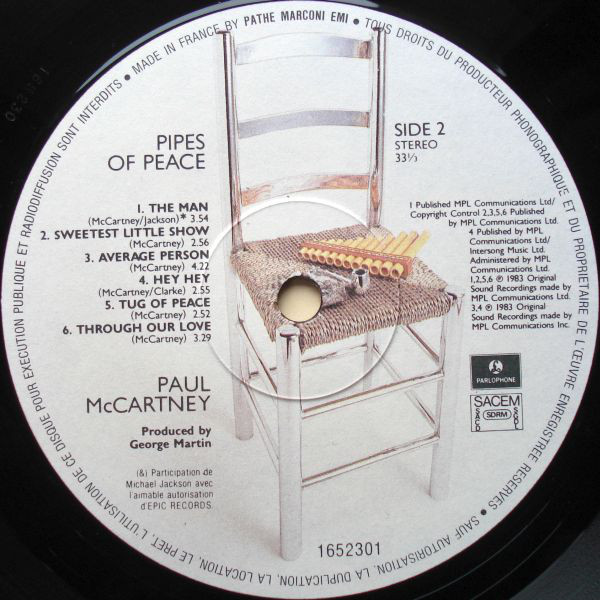
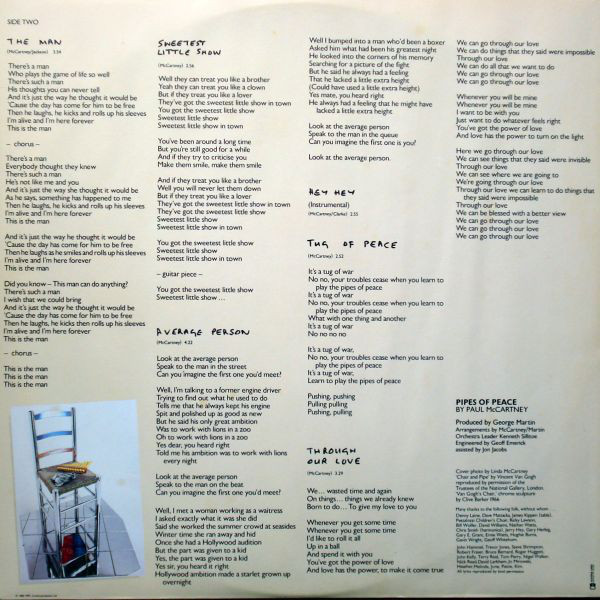
This background and recording detail is fantastic - thank you. I love listening to this album on streaming, so it's also fascinating to look at the full album art and packaging. All this gives a much better sense of the whole project, its intention and context.
The PaulMcCartney Project • Aug 08, 2020 • 5 years ago
Thanks for your message @george !

Jacob • Feb 08, 2022 • 4 years ago
are there stand alone releases of the demos of Tug of War and Pipes of Peace? i know some are bundled on the more recent remaster/reissues but interested in a stand alone albums of those, thanks!
The PaulMcCartney Project • Feb 08, 2022 • 4 years ago
Hi Jacob, I don't think there is such standalone releases. At best, you should be able to find a 2-CD bundle with the first CD being the remastered album and the 2nd CD being the demos.
Jacob • Feb 08, 2022 • 4 years ago
ok thanks, I love the demos for these albums, I like the proper albums too but personally feel the spirit of the songs shine through a bit more in the demos as the production styling on the albums (especially Pipes of Peace) feels dated to me, cheers!

Mike Brittain • Jul 15, 2025 • 1 year ago
Do you have a list of string players for the recording please
The PaulMcCartney Project • Jul 16, 2025 • 1 year ago
Hi Mike, so far, I don't have more details than what is listed on this page. Thanks